
Everyone has taste. Not everyone protects it.
On taste, attention, and the life that's actually yours
Your taste is not your aesthetic, not your feed, not the version of yourself you've curated for other people. It's your anchor. You can't buy it. You can't borrow it. You can only develop it. Slowly, through experience, through paying attention, through choosing the thing that feels right even when the world is telling you otherwise.
For a long time, taste was treated as belonging to certain people. The ones with the right education, the right postcode, the right references. But that was never taste. That was fluency in a code. Knowing the wine, the architect, the obscure record label. Impressive, maybe. But discernment is something different.
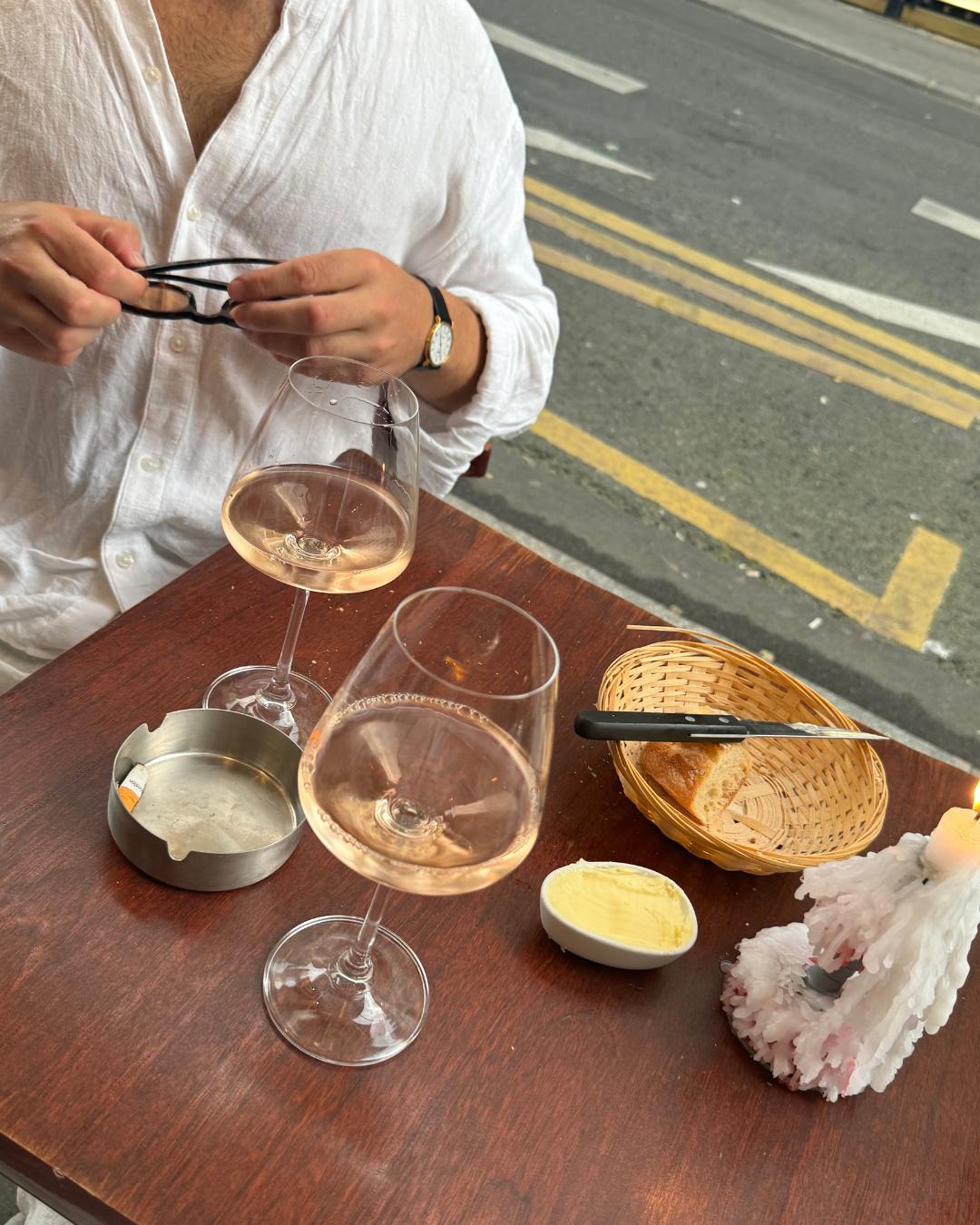
The real thing is democratic in origin and rare in practice. Everyone is born with instinct. Very few people keep it. Most have it educated out of them, socialised out of them, optimised out of them before they ever find out what they actually like.
So this isn't about taste belonging to everyone in some flattening, everyone-gets-a-trophy way. It's sharper than that. Taste was never the exclusive property of the people who claimed it. They just had more time and permission to develop it.
The question was never who has taste. It's who had the courage to hold onto theirs.
Taste doesn't develop in theory. It develops when you're actually in the room. In the experience. Having the conversation. Eating the thing, being in the place, paying attention to what feels slightly off and what feels exactly right. That feeling, the one you can't always articulate, the one that arrives before the words do, is the whole point. You're calibrating. Most people ignore it. The Tasteful Hedonist™ doesn't.
And yes, presence requires capacity. If you're in survival mode, noticing whether something feels slightly off is a luxury you can't always afford. That's true and worth saying.
But some of the most taste-led people have no interest in being rich. No interest in the flashy car, the big house, the particular room. The most content person I've ever met didn't have everything. He had enough. He'd looked at the full menu of what you're supposed to want and quietly opted out. That's not a lack of ambition. That's a taste decision. And it's Trendie.
Meanwhile there are billionaires reading self help books. Still outsourcing the question of how to live. Still trying to optimise their way to a feeling that can't be optimised. All that resource, all that freedom, and they're still looking outside themselves for the answer.
Taste doesn't correlate with wealth. It correlates with attention.
The risk isn't that you'll enjoy too much. It's that you'll enjoy the wrong things for long enough that you forget what the right ones felt like.
You don't lose yourself in one dramatic moment. You lose yourself gradually, by saying yes to enough things that aren't quite right that eventually you can't remember what right felt like. The expensive holiday that looked incredible and felt empty. The dinner with people you perform for. The job that made sense on paper. The relationship that looked right from the outside. All of it reasonable. All of it chosen.
None of it wrong exactly. It just isn't yours.
That's what Tasteful Hedonism® is.
Not excess. Not indulgence for its own sake. It's what happens when someone has done the work of knowing what they actually like, and then has the nerve to build their life around it. The food, the places, the people, the pace. Chosen, not inherited. Felt, not performed.
The Tasteful Hedonist™ is not trying to signal anything. They're not optimising for an audience. They have no interest in being impressive. They're present in the life they've built because it's genuinely theirs. That's what makes it so distinct. And honestly, so rare.
Most people are living a life assembled from other people's taste. It works, on the surface. But it's hollow in a way they can feel.
Tasteful Hedonism® is the alternative. Not a rejection of pleasure, a refinement of it. Less of what you're supposed to want. More of what you actually do.
The Tasteful Hedonist™ isn't optimising. They're noticing. Those are opposite activities.
