
La Dolce Vita and Why It Doesn’t Actually Translate
Notes on Culture, Permission, and Living Well Now, Not Later.
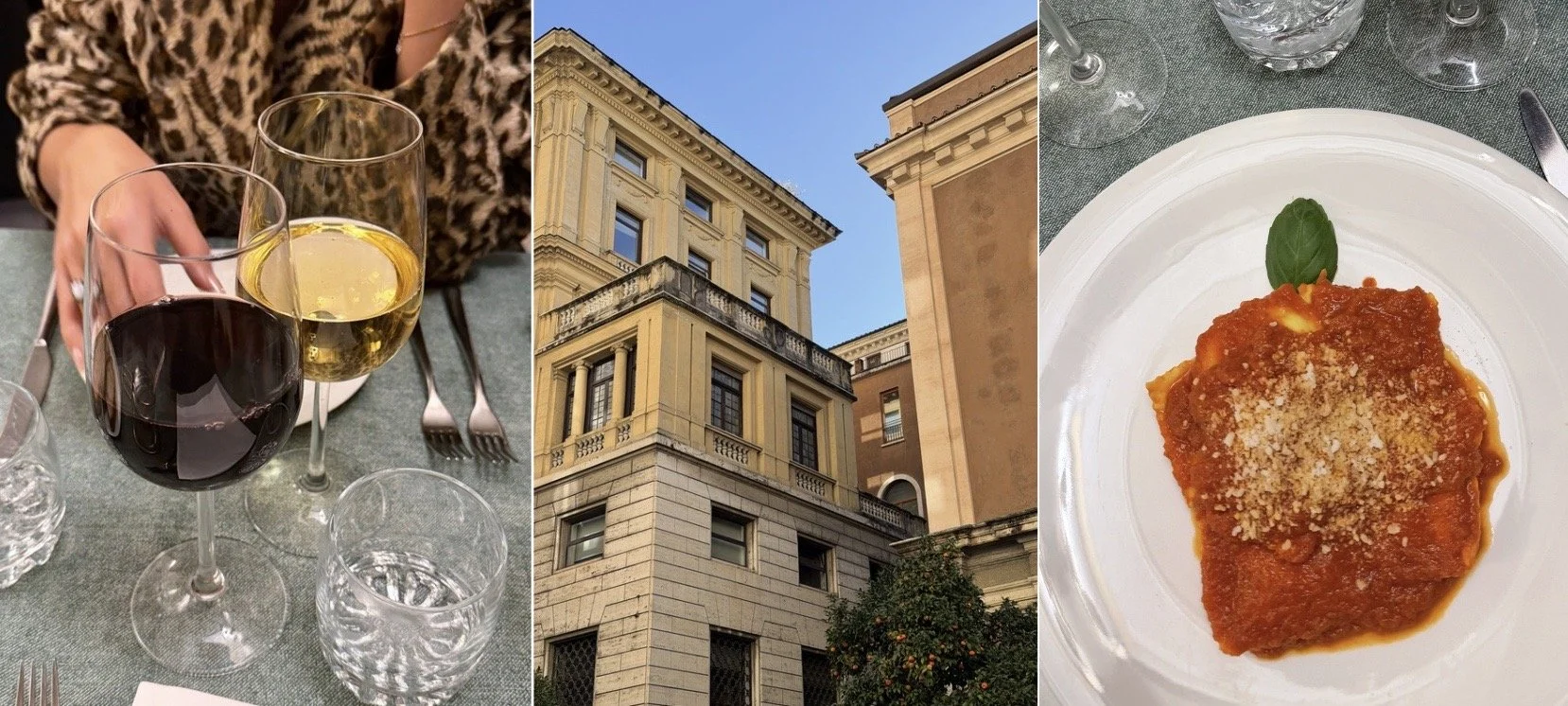
I spent last week in Rome. I do not know Italy well at all, and yet it has always felt familiar. I felt strangely at home there, mostly because I could be expressive without apologising for it.
Maybe it is shared values. A shared sensibility. A mutual appreciation for good food, ritual, and taste, something I can thank my French side for. But more than that, I have always felt that Italians live well in a way that feels instinctive rather than learned.
What Rome made clear to me is that it is not that Italians know how to live well. They simply do. It is not a mindset or a philosophy. It is less a savoir faire, in the French sense, and more a way of being. So embedded that asking how they do it almost misses the point entirely.
It does not feel curated or carefully engineered. It is woven into daily life so deeply that it barely registers as a choice.
The slower pace. Recipes passed down through generations. A morning espresso taken standing at the bar. Lunches that stretch into the afternoon. We romanticise an idea of Italy, and while reality is far more complex, something still holds true. Pleasure is not something to earn, schedule, or postpone. It is folded into the day as it already exists.
It feels simple. And yet almost impossible to replicate.
The Packaged Ideal
Culture is not aesthetic. It is accumulated habit, climate, history, language, religion, economics. You cannot import the terrace without importing the structure that sustains it.
What reaches us is the packaged version. The edit. The exportable ideal. And we buy into it because it offers something we quietly lack: permission to live well without justification.
“The sweetness of doing nothing”
There is an Italian expression, la dolce far niente.
The sweetness of doing nothing.
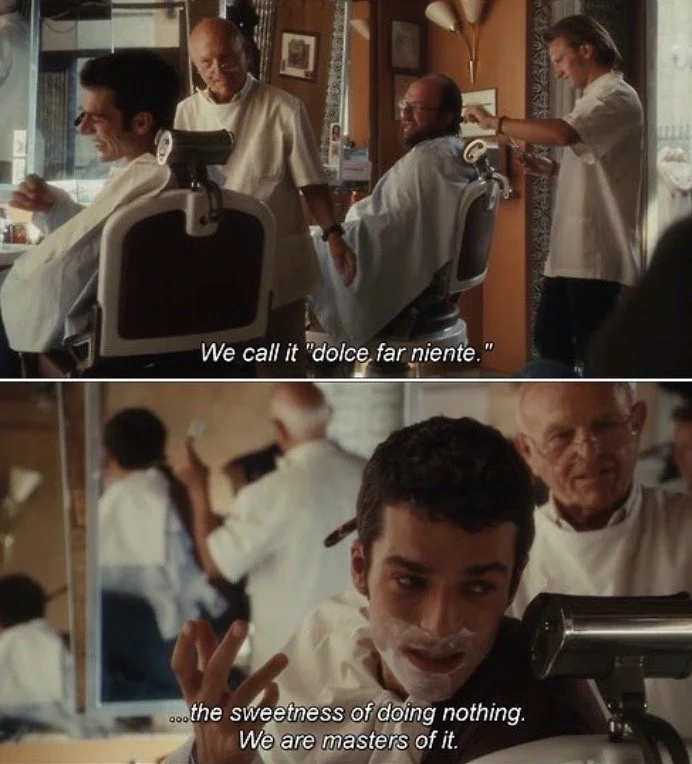
Easy for an Italian. Incredibly uncomfortable for almost everyone else.
Outside of Italy, it does not quite translate. Especially if you’re British. That doesn’t make us bad or wrong. It simply means we’re different.
English language was not built to hold states of being in the way Latin languages are. It was built to resolve meaning quickly. To ask what something is for. To move forward.
We struggle with doing nothing unless it’s a holiday, a weekend, or something safely labelled as laziness.
We inherited a culture built on keeping calm and carrying on. Whether we accept it or not, that shapes how comfortable we are with stillness and pleasure. The reality we live in today is that modern life intensifies it.
Life now is organised around output, optimisation, and speed. Time is measured and justified. Even rest is expected to serve a function. Even pleasure is framed as a reward or recovery tool, something that helps us return to productivity. In that context, doing nothing does not feel sweet. It feels irresponsible.
But when Italians speak about doing nothing, they are not referring to laziness, they are describing presence. Allowing time to stretch without guilt. Being fully inside a moment that is not productive or impressive. That phrase exists because the culture protects it. The infrastructure holds it.
Optimisation and Accountability
That is not to say Italy has avoided modern life. It has simply resisted allowing optimisation to reorganise everything.
Pasta is a good example. It hasn’t been endlessly updated. It has been protected. Not out of resistance to progress, but out of respect for what already works.
That same respect applies to everyday rhythm. Long lunches remain. Shops close. Evenings stretch. Not because efficiency or optimisation was never considered, but because those rhythms serve something deeper than productivity.
I noticed this when we were out for dinner at 9.30pm on a monday evening. The restaurant we ended up in was full of locals, I had a large plate of delicious fresh pasta that was actually very reasonably priced and a glass of wine that was rather generous. The table next to us was filled with a large family, the grandparents were there too. Plates were passed back and forth. Food kept coming, and even past 10pm - shocking. And there was no sign of them leaving any time soon.
I loved it. Mostly because I’m not used to seeing that in London. And what stayed with me was how little explanation was required. No one questioned why we stayed so long, ate so slowly, or let the evening stretch into itself. There was no sense that enjoyment needed justifying, or that time had to be defended. In London, moments like this tend to come with an excuse or some form of reason. We explain why we deserve them. We frame them as treats. We save them for later. Even rest must prove its usefulness.
Renting Intensity.
But I don’t want to postpone enjoyment. I don’t want it to sit somewhere in the future, waiting for a holiday or a milestone. I want to live with it now, as things already are. And the truth is, I do. Rome just made me realise how much time I spend explaining that. Softening it. Making it sound reasonable. Translating something that, there, doesn’t need translating at all.
Our circumstances are different, of course. Italy isn’t perfect and London isn’t broken. But I have always instinctively prioritised enjoyment. Not in a reckless way. Not at the expense of ambition. I just never felt that building something meant I had to rush through my own life in the process.
An Anchor, Not an Escape
I love living in London. I like its pace. I like that people are building things. But I don’t want enjoyment to live only at the edges of that. Saved for a weekend. Concentrated into one big trip. Pushed into the background until everything else is done.
Growing up French and English meant I was used to moving between rhythms. One side of me relaxes into a long meal without guilt. The other wants to get up early and get things moving. It never felt dramatic. It just felt normal. The difficulty came when I tried to explain that inside a culture that tends to separate pleasure and ambition, as though one must interrupt the other.
For a while I tried toning one side down. It never quite worked. The words always felt slightly wrong.
Trendie is what happened when I stopped trying to justify it and started owning it instead. Not a place I escape to. Not an Italian fantasy brought back to London. Just a way of living that allows me to build and enjoy at the same time. Something I inhabit, not something I visit.
Rome didn’t change how I live. It clarified it.
Some people go for the pasta and the Aperol in the sun. I go for that too. But I’m also paying attention to how it feels and what it shows me about my own life. I’m not travelling to escape what I’ve built. I’m travelling to understand it better. To bring something back with me.
Travel, for me, isn’t escape.
It’s a way to make my own life and perspective richer.
A reminder to live well now, not later. Not only when in Rome.
